If you suspect malware on your WordPress site, the Malware Scanner helps you find where the problem is.
The scanner is thorough. Some files and names can look suspicious even when they are safe. Review results before you delete anything.
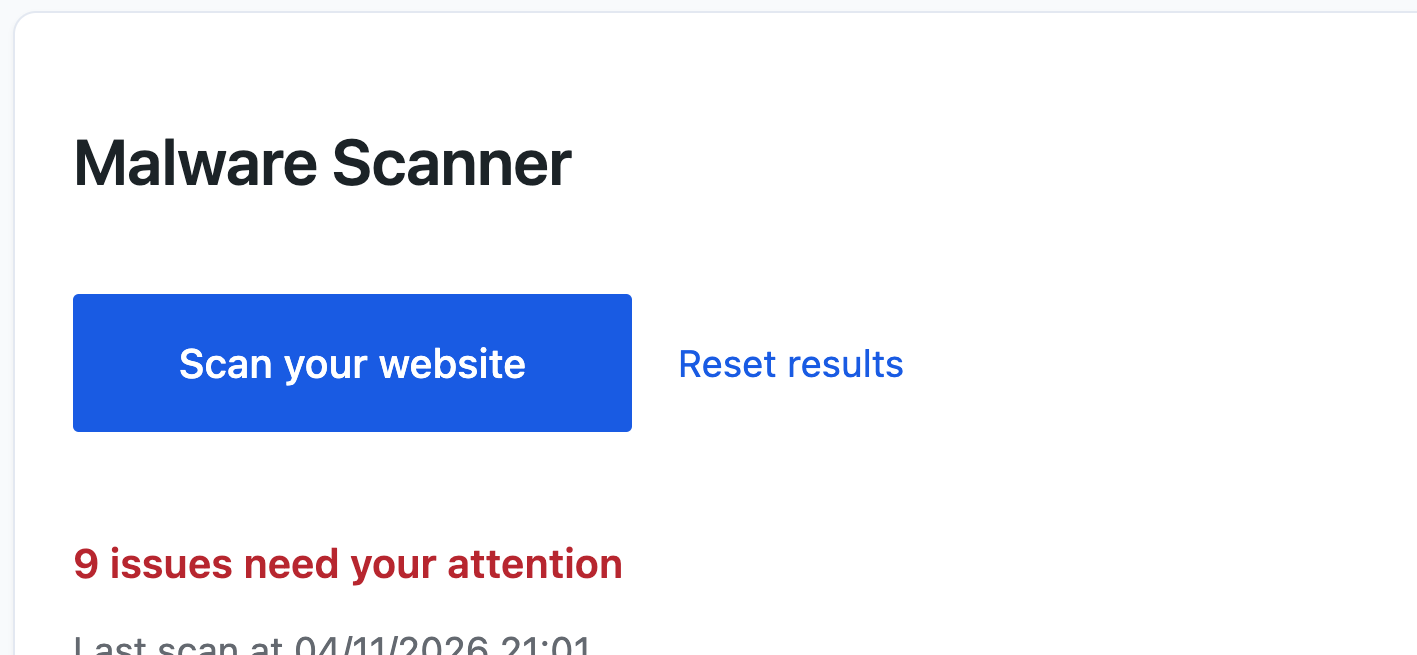
Go to Security Ninja → Malware and click Scan your website.
While the scan runs, a Scan in progress card lists each step (cache, definitions, plugin integrity, database and persistence markers, file scan, results). A timer sits in that card. Do not treat the site as clean until every step finishes.
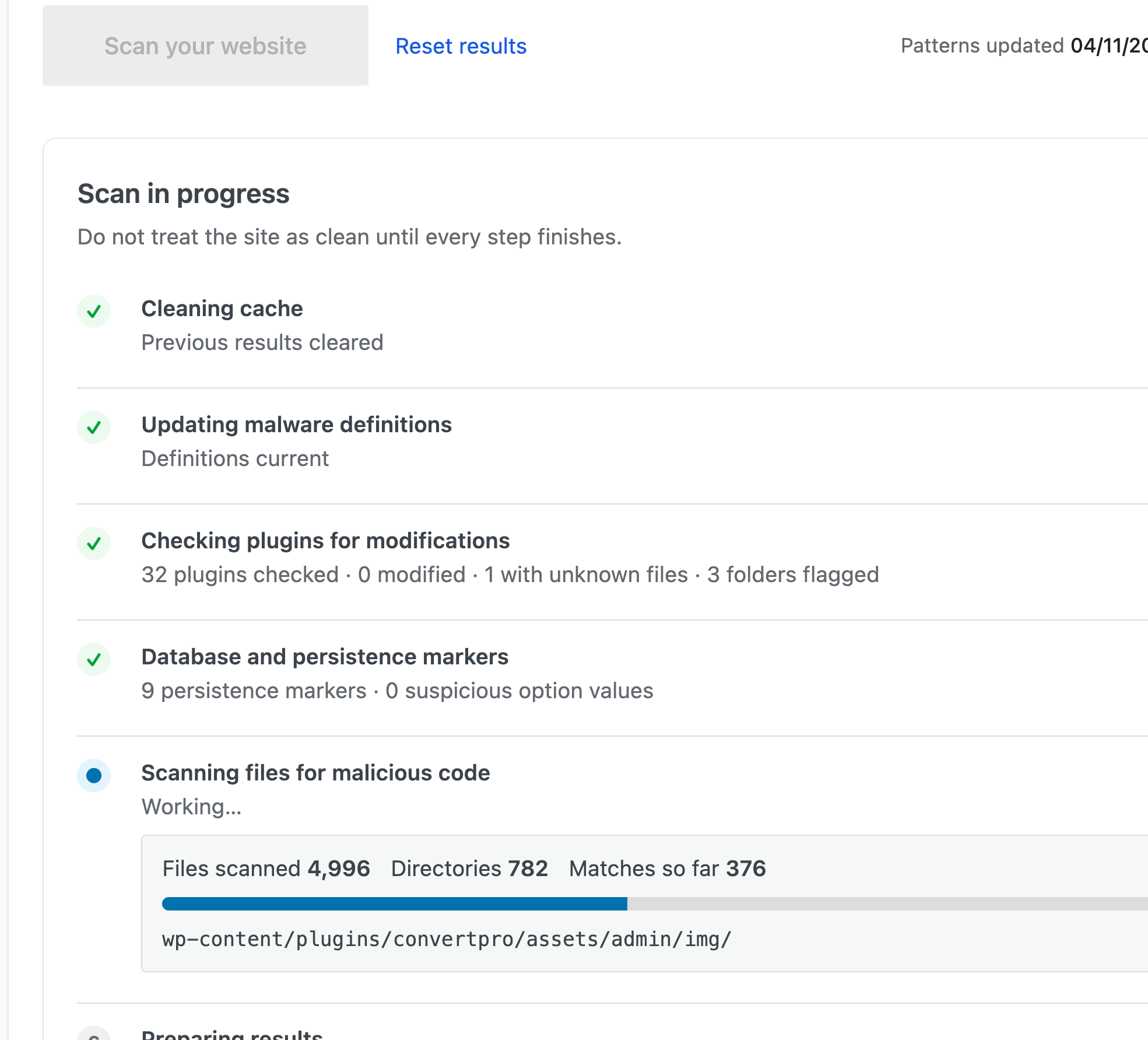
A scan can take a few seconds or several minutes, depending on how many plugins and files you have.
The scan checks plugins, themes, uploads, other site files, known malware folders, and persistence markers in options and cron. Some WordPress core JavaScript paths are skipped by default. See how the Malware Scanner works for the full steps.
When the scan finishes, results appear on the same page. You do not need a full reload.
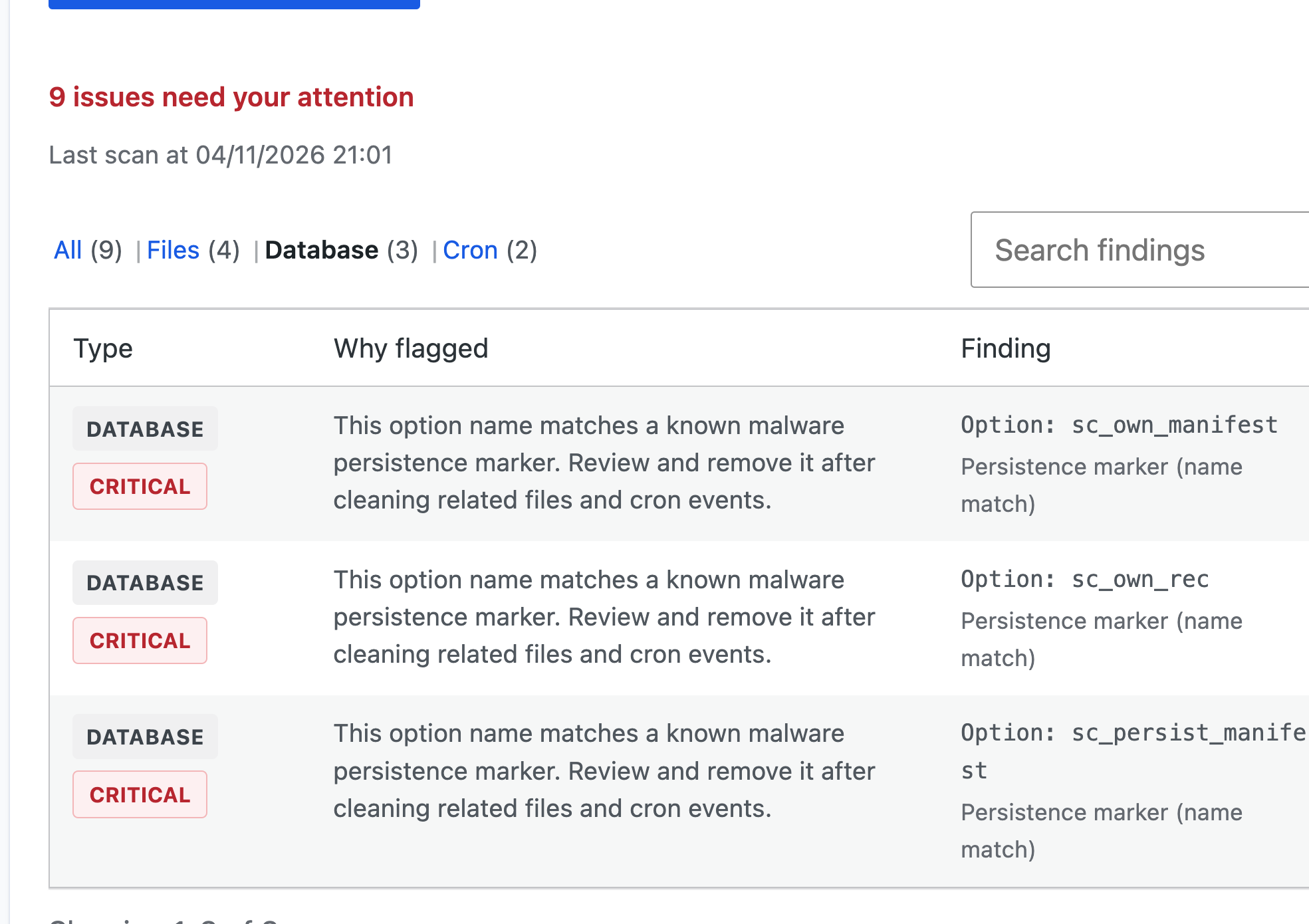
The header shows how many issues need attention and when the last scan finished. Use the filters to focus on files, database markers, or cron events. Search narrows the table. Each row shows type, why it was flagged, the finding, and actions.
On file rows you can open View in the File Viewer, ignore (whitelist) the path, or delete when you are certain the file should go. Database rows can offer Delete option. Cron rows can offer Clear cron.
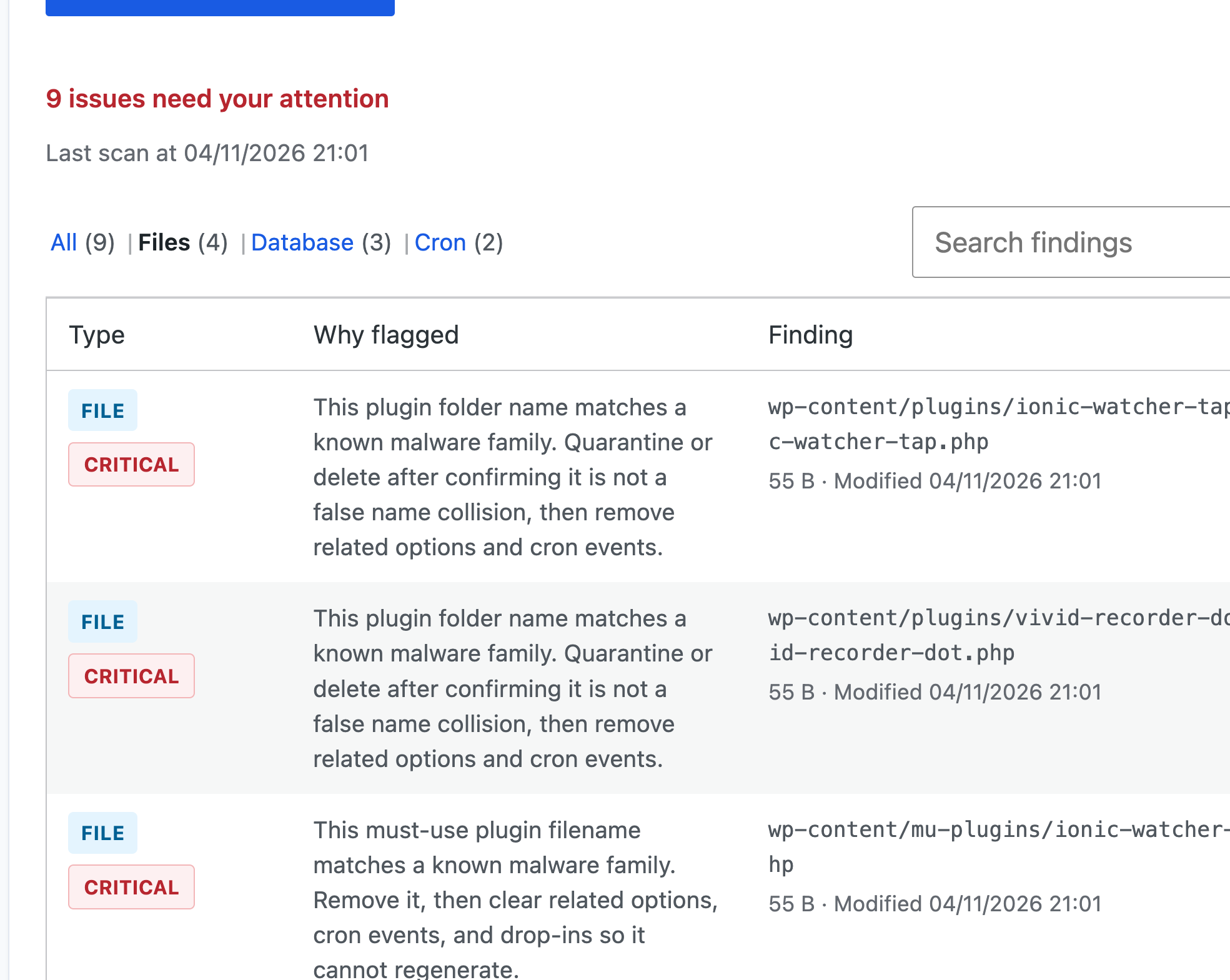
Some rows are structural or name-match findings (suspicious plugin or theme folder layout, or a known malware folder name). Treat those as review recommended, not automatic proof of infection.
Folder findings look like this:
Whitelist a suspicious file
Whitelisting a file means it will not show up as a finding on the next scan. It appears in the list of whitelisted files instead. Prefer whitelist only after you have inspected the file.
Delete a suspicious file or option
Deleting a file from an active plugin can break the site. Confirm the file contains malicious code before you delete it. Removing a required plugin file can stop that plugin from working.
Deleting a database option or clearing a cron is also permanent for that marker. Only do it when the row matches persistence you intend to remove, and after related files are handled.
Why was something marked as suspicious?
The scanner looks for patterns that match known malware or risky code, known malware folder and option names, checksum mismatches, and structural oddities. A plugin on the list is not always infected. Part of its code or its folder name may simply match something the scanner flags.
We keep improving the scanner to reduce false positives, while still catching real threats.
For cleanup after an infection, use the malware cleanup checklist.